Building a Studio That Runs Without Me
A persistent vault, backed up on a schedule, agent-agnostic by design — the infrastructure that lets one person do the work of a whole team.
A bunch of ideas keep flying into my head, so let me put this one down: I want to build a system where I'd normally need a whole team — and just do it myself.
The vault should live somewhere that never sleeps
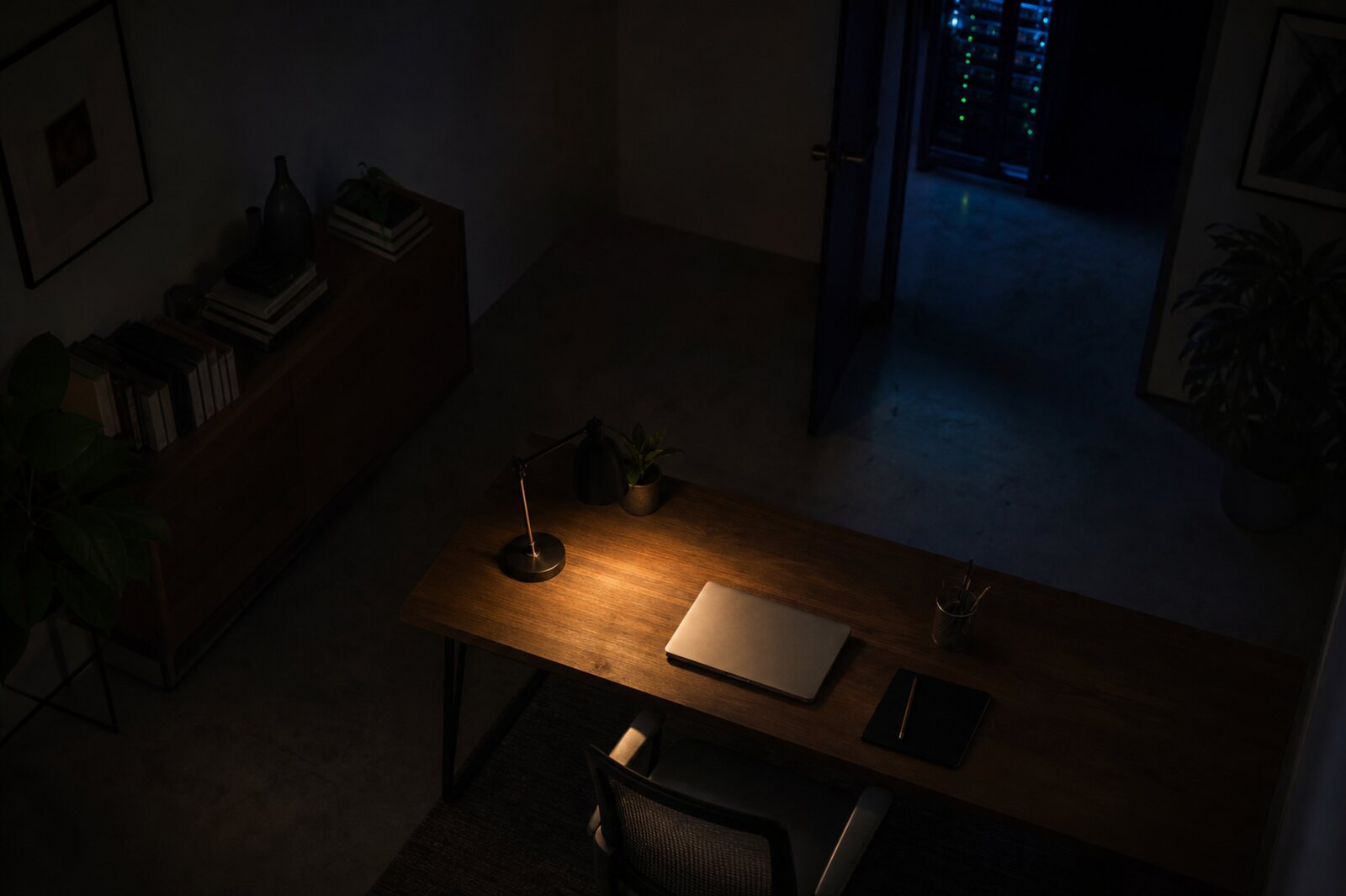
Right now my studio vault lives on my machine. The problem is my machine turns off. So the plan is to move the vault to a server that stays on all the time, and put it on a schedule: every morning it pulls any changes, then pushes the day's work up to a GitHub repo. Then it does that again every four hours through the day, so the backup is always current with what I actually did.
Why bother? Because then I can run the operations of the studio from anywhere. A lot of my work is opening folders and running specific workflows inside each one. If the server's up, my phone is enough. I'm going to Vancouver next week — I don't want to load everything onto a hard drive and hope. I want to connect to the server and keep going.
And if I can't even reach the server? Doesn't matter. The GitHub backups are always running. Worst case, I pull the latest backup and pick up from there. That redundancy is the whole point.
Projects live in a sibling folder, not the main vault
At first I thought all my client projects would live inside the studio vault. Bad idea. They belong in a sibling folder — the clients folder — each project sitting in its own directory.
At the root of that folder is a CLAUDE.md. That file holds the state of every project: when I last touched it, its current status, the next thing that needs doing, and when I decided that next thing was due. That's how I stay on top of what's actually moving without holding it all in my head.
Here's a related move I love. For one client build, instead of waiting on the client to send me info, I flip it: I book a casual meeting, pull up a sheet of open questions, and just go down the list. "What's this?" They talk. "What's that?" They talk. From that conversation I can fill in the site itself. Same information, a fraction of the friction — and it's a nicer way to work.
Agent-agnostic on purpose
The best part of this system is that it runs. It runs from a dedicated account on the server, separate from my personal machine, so the studio's operations never depend on my local setup.
It also can't be tied to one model. Right now I'm out of usage on one assistant — fine, I switch to another and keep moving. The system has to be agent-agnostic, or a single vendor's limit becomes my studio's limit.
Why this matters
The beauty of the whole thing is that it takes a situation where I'd normally need a full team and lets me do it alone. And it's not a permanent solo setup — as I bring people on, it gets less robotic. I hand off pieces of the system to teammates who manage and expand them.
Right now, we're in the big development phase. I'm building the car. The infrastructure is what makes everything after it easier to ship.
Written by Vanity Arias · AriaCode Tech
Build something with me →